
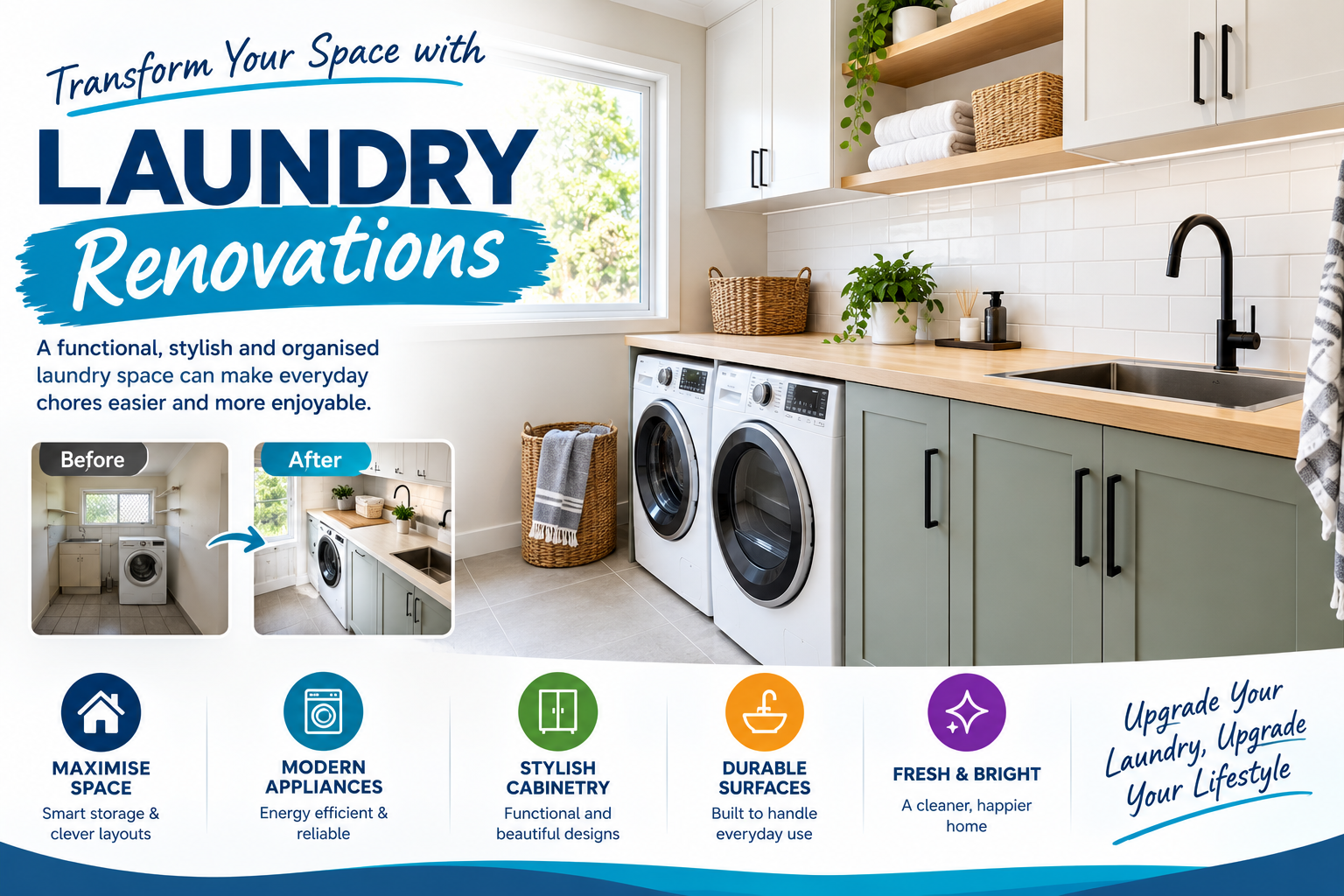
Have you ever walked into your laundry and thought, “This space could work so much harder for me”? Maybe you’re tired of cramped corners, dodgy plumbing, or storage that just doesn’t cut it? Perhaps you’ve been dreaming of a laundry renovations that actually makes washing day feel less like a chore?
You’re not alone. The laundry renovations are one of the most hardworking rooms in any Australian home, yet it’s often the last space to get any love. A well-planned renovation can transform this overlooked area into a functional, stylish space that makes your daily routine smoother. Plus, it can add real value to your property.
Planning Your Laundry Renovations
Before you start ripping out cabinets or choosing tiles, proper planning is essential. Getting this stage right will save you time, money, and plenty of headaches down the track.
Creating a Timeline That Works
Most laundry renovations take between one and three weeks, depending on complexity. If you’re only updating surfaces and fixtures, you might be done in a few days. However, if plumbing or electrical work is involved, expect a longer timeline.
Consider timing your renovation during a period when you can manage without laundry renovations facilities. Alternatively, arrange temporary access to a laundromat or a friend’s washing machine. Planning ahead means less stress when the work begins.
Assessing Your Current Laundry Renovations Space
Before designing your new laundry renovations, take a good look at what you’re working with. This assessment will guide every decision you make moving forward.
Measuring Your Laundry Room Correctly
Grab a tape measure and record every dimension length, width, ceiling height, and the location of existing plumbing and electrical points. Don’t forget to note door swing directions and window placements. Accurate measurements prevent costly mistakes when ordering cabinetry and appliances.
Identifying What’s Working and What Isn’t
What do you love about your current setup? What drives you crazy? Maybe your benchtop space is great, but storage is lacking. Perhaps the lighting is poor, or ventilation is non-existent. Make a list of pain points to address in your renovation.
Is Your Laundry Plumbing Up to Standard?
Old plumbing can cause major issues. Check for signs of leaks, slow drainage, or corroded pipes. If your home is older, it’s worth having a licensed plumber inspect the system before you start. Upgrading plumbing during a renovation is far easier than dealing with problems later.
Designing Your Dream Laundry Renovations
Now for the exciting part creating a space that looks great and functions beautifully.
Popular Laundry Renovations Layout Ideas
Australian homes vary enormously, from sprawling suburban houses to compact apartments. Consider galley-style layouts for narrow spaces, L-shaped designs for corner rooms, or open-plan laundries that connect to mudrooms or garages. The best layout maximises workflow and makes good use of every square metre.
Small Laundry Renovations
Ideas That Maximise Space
Working with limited space? Stack your washer and dryer to free up floor area. Install wall-mounted drying racks that fold away when not needed. Use vertical storage with floor-to-ceiling cabinets. Light colours and good lighting make small spaces feel more open and airy.
Choosing the Right Colour Scheme and Finishes
Neutral tones like white, grey, and soft blues remain popular choices for laundries. They create a clean, fresh feel and won’t date quickly. For something bolder, consider a feature splashback or coloured cabinetry. Just keep in mind that darker colours can make small spaces feel cramped.
Essential Features for a Functional Laundry Renovations
A beautiful laundry renovations means nothing if it doesn’t work well. Here’s what to include for maximum functionality.
Storage Solutions
Clever storage makes all the difference. Upper cabinets keep cleaning supplies out of sight. Open shelving provides easy access to frequently used items. Pull-out hampers, fold-down ironing boards, and dedicated spots for laundry baskets keep everything organised.
Flooring Options
Laundry floors cop a beating from water splashes, dropped items, and heavy foot traffic. Tiles remain the most popular choice they’re waterproof, durable, and easy to clean. Vinyl flooring offers a budget-friendly alternative with good moisture resistance. Avoid carpet and untreated timber, which don’t handle moisture well.

Appliances and Fixtures
Selecting the right appliances and fixtures ensures your laundry performs at its best.
Selecting the Best Washing Machine and Dryer Setup
Front loaders are water-efficient and can be stacked with dryers. Top loaders offer easier loading but require more headroom. Heat pump dryers cost more upfront but save on energy bills. Consider your household size, available space, and energy priorities when choosing.
Do You Need a Laundry Tub or Sink?
Absolutely. A good-sized tub is invaluable for handwashing delicates, soaking stained clothes, and washing muddy boots. Choose a tub that’s deep enough to be practical but doesn’t overwhelm your space. Stainless steel and composite materials are both excellent choices.
Tapware and Plumbing Considerations
Quality tapware lasts longer and performs better. Consider a mixer tap with a pull-out spray head for versatility. Make sure your plumbing can handle the water pressure requirements of modern appliances.
Electrical and Ventilation Requirements
Getting the technical details right is crucial for safety and functionality.
Power Points and Lighting
Your laundry needs adequate power points at minimum, you’ll want outlets for your washer, dryer, and iron. Position them conveniently and consider adding USB charging points. Good lighting is equally important. Combine overhead lighting with task lighting above the benchtop for a bright, practical space.
Ventilation: Preventing Mould and Dampness
Laundries generate significant moisture. Without proper ventilation, you’re inviting mould and mildew. Install an exhaust fan that vents outside, not into the ceiling cavity. If possible, include a window for natural airflow. Good ventilation protects both your health and your home.
DIY vs Professional Laundry Renovations
Knowing what you can tackle yourself saves money without compromising quality.
What Can You Do Yourself?
Painting walls, installing floating shelves, assembling flat-pack cabinets, and updating door handles are all manageable DIY tasks. Laying vinyl flooring is achievable with patience and preparation. Just be honest about your skill level.
Conclusion
Renovating your laundry renovations are an investment that pays off in daily convenience and added home value. By planning carefully, choosing durable materials, and getting the right help when needed, you can create a space that makes laundry day genuinely easier.
Remember, the best laundry isn’t necessarily the flashiest it’s the one that suits your household’s needs perfectly. Take time to think about how you use the space now and how you’d like to use it in future. Your checklist is your roadmap to success.