
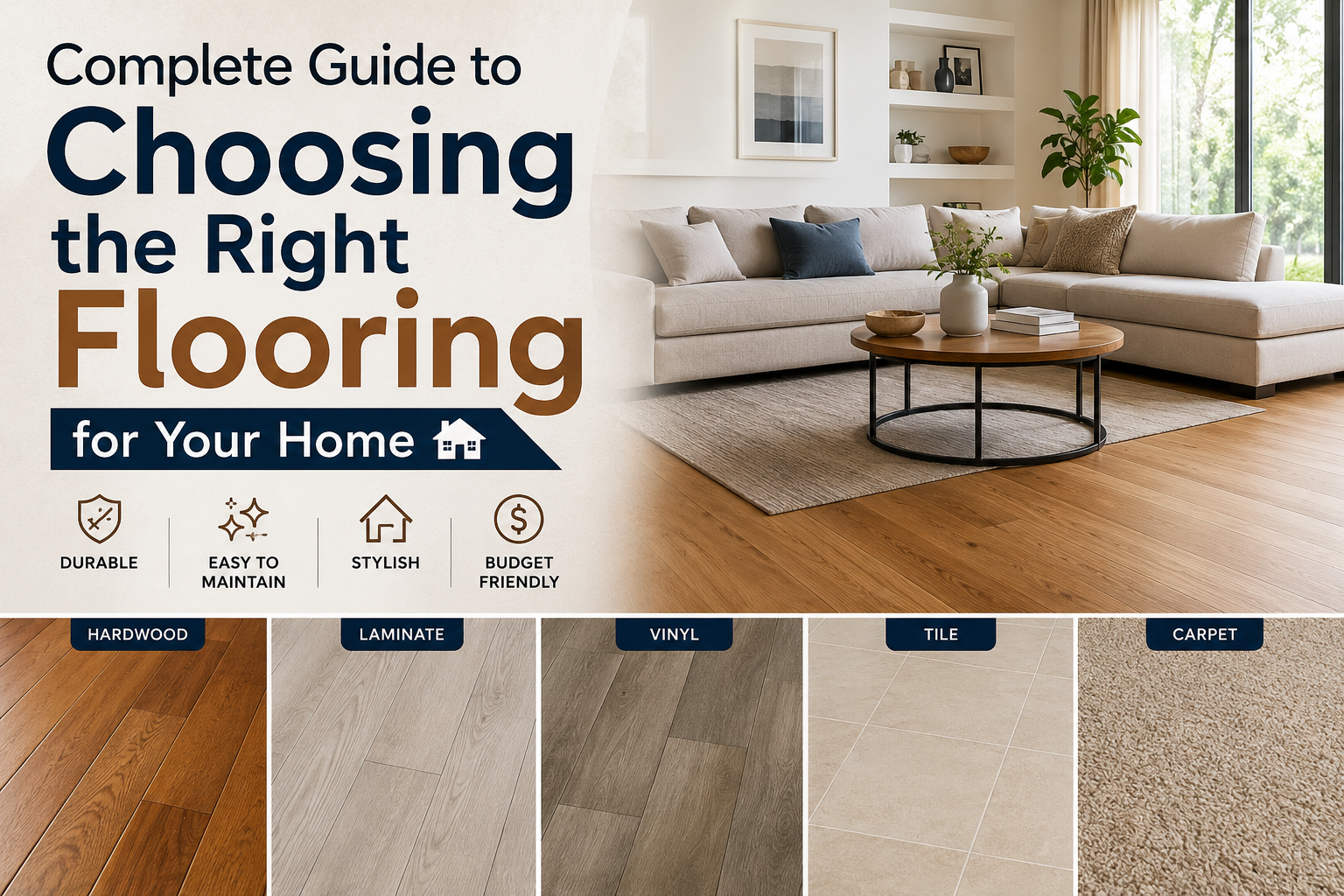
Flooring plays a major role in the appearance, comfort, and functionality of any property. Whether you’re building a new home, renovating an office, or upgrading a commercial space, choosing the right flooring can improve durability, increase property value, and create a lasting impression.
From hardwood and laminate to vinyl, tile, and carpet, each flooring option offers unique benefits. Understanding the features, maintenance requirements, and ideal applications of different flooring materials will help you make an informed decision that suits your lifestyle and budget.
Why Flooring Matters
Flooring is more than just a surface to walk on. It contributes to the overall design, safety, comfort, and efficiency of a space. The right flooring can:
- Enhance the visual appeal of your property
- Increase durability in high-traffic areas
- Improve indoor comfort
- Add value to your home or commercial building
- Reduce maintenance costs over time
- Support better insulation and noise reduction
Whether you’re renovating a single room or an entire property, investing in quality flooring is a decision that delivers long-term benefits.
Popular Types of Flooring
Choosing the right flooring starts with understanding the available options.
Hardwood Flooring
Hardwood flooring remains one of the most popular choices due to its timeless beauty and durability. Made from natural timber, hardwood creates a warm and elegant atmosphere suitable for living rooms, bedrooms, and offices.
Benefits include:
- Long lifespan
- Natural appearance
- Can be refinished multiple times
- Increases property value
However, hardwood requires regular maintenance and may not be ideal for moisture-prone areas.
Laminate Flooring
Laminate flooring offers the appearance of wood or stone at a more affordable price. It consists of multiple layers designed to resist scratches and everyday wear.
Advantages include:
- Budget-friendly
- Easy installation
- Low maintenance
- Scratch-resistant
Laminate flooring works well in family homes and busy living spaces.
Vinyl Flooring
Vinyl flooring has become increasingly popular because of its durability and water resistance. Luxury Vinyl Planks (LVP) and Luxury Vinyl Tiles (LVT) closely resemble natural materials while providing superior performance.
Key benefits:
- Waterproof
- Comfortable underfoot
- Easy to clean
- Suitable for kitchens, bathrooms, and commercial spaces
Modern vinyl flooring is available in a wide range of colours and finishes.
Tile Flooring
Ceramic and porcelain tiles are ideal for areas exposed to water and heavy foot traffic.
Common applications include:
- Bathrooms
- Kitchens
- Laundry rooms
- Commercial buildings
Tile flooring is highly durable, stain-resistant, and available in countless design options.
Carpet Flooring
Carpet provides warmth, softness, and sound insulation, making it ideal for bedrooms, family rooms, and office environments.
Benefits include:
- Comfortable underfoot
- Reduces noise
- Available in many colours and textures
- Creates a cosy atmosphere
Regular vacuuming and professional cleaning help maintain its appearance.
Factors to Consider When Choosing Flooring
Selecting the best flooring involves more than appearance alone. Consider the following factors before making a decision.
Room Usage
Different rooms require different flooring materials.
For example:
- Bathrooms benefit from waterproof flooring.
- Kitchens require stain-resistant surfaces.
- Living rooms often prioritise aesthetics.
- Commercial spaces demand high durability.
Durability
High-traffic areas need flooring capable of withstanding daily wear and tear. Families with children or pets should choose scratch-resistant and easy-to-clean materials.
Maintenance
Some flooring options require more upkeep than others.
For example:
- Hardwood requires polishing and refinishing.
- Carpet needs regular deep cleaning.
- Vinyl and tile require minimal maintenance.
Consider how much time you’re willing to spend maintaining your floors.
Budget
Flooring costs vary significantly depending on material, installation, and maintenance requirements.
While premium flooring may involve higher upfront costs, it often provides better durability and long-term value.
Style and Design
Flooring should complement your interior décor. Consider factors such as:
- Colour
- Texture
- Finish
- Pattern
- Room size
- Natural lighting
Lighter flooring can make smaller rooms appear larger, while darker tones create warmth and sophistication.
Benefits of Professional Flooring Installation
Although some flooring products are suitable for DIY installation, hiring professionals offers several advantages.
Professional installers ensure:
- Accurate measurements
- Proper subfloor preparation
- Precision cutting and fitting
- Faster installation
- Reduced material waste
- Long-lasting results
Proper installation helps maximise the lifespan of your flooring investment.
Flooring Maintenance Tips
Keeping your flooring in excellent condition requires regular care.
Here are some practical maintenance tips:
- Sweep or vacuum frequently to remove dirt.
- Clean spills immediately to prevent stains.
- Use furniture pads to avoid scratches.
- Place mats at entrances to reduce dirt.
- Follow manufacturer cleaning recommendations.
- Avoid excessive moisture on wood flooring.
- Schedule professional cleaning when necessary.
Routine maintenance preserves both appearance and performance.
Sustainable Flooring Options
Many homeowners now prioritise environmentally friendly flooring materials.
Popular sustainable options include:
- Bamboo flooring
- Cork flooring
- Reclaimed hardwood
- Recycled vinyl
- Natural linoleum
These materials reduce environmental impact while providing attractive and durable flooring solutions.
Flooring Trends in Modern Homes
Current flooring trends combine style with practicality.
Popular choices include:
- Wide plank hardwood
- Natural oak finishes
- Waterproof luxury vinyl planks
- Large-format porcelain tiles
- Matte finishes
- Herringbone patterns
- Neutral colour palettes
- Eco-friendly materials
These trends create modern interiors that remain timeless and functional.
Common Flooring Mistakes to Avoid
Choosing flooring without proper planning can lead to costly mistakes.
Avoid these common errors:
- Selecting flooring based only on appearance
- Ignoring moisture levels
- Choosing the wrong material for high-traffic areas
- Underestimating installation costs
- Skipping professional installation
- Neglecting maintenance requirements
- Purchasing low-quality materials solely to save money
Careful planning helps ensure your flooring performs well for many years.
Why Quality Flooring Is a Smart Investment
Quality flooring enhances both residential and commercial properties. It improves comfort, increases property value, and reduces future repair costs. Whether you’re renovating one room or designing an entire building, selecting durable, attractive flooring provides lasting benefits.
Investing in premium materials and professional installation often results in lower maintenance expenses and better long-term performance.
Conclusion
Choosing the right flooring is an important decision that affects the appearance, functionality, and value of your property. With options such as hardwood, laminate, vinyl, tile, and carpet, there’s a flooring solution to suit every style, budget, and application.
By considering factors like durability, maintenance, room usage, and design preferences, you can confidently select flooring that meets your needs for years to come. Whether you’re updating your home or improving a commercial space, quality flooring creates a strong foundation for beautiful and practical interiors.