
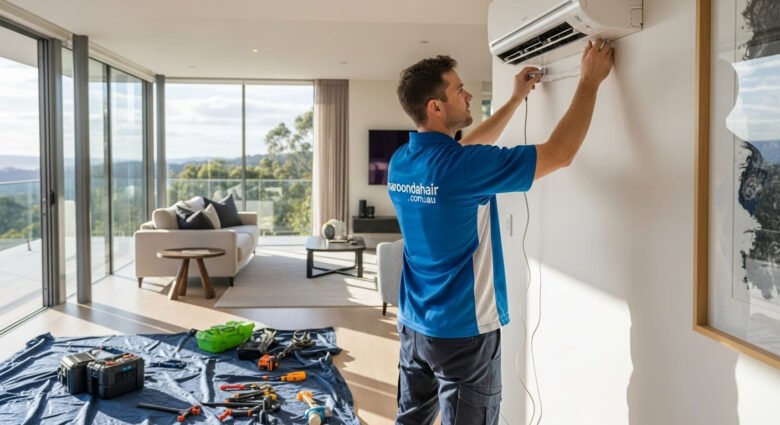
Split system installation is the process of mounting and connecting a reverse-cycle split-system air conditioner by a licensed technician. In Melbourne, split systems are the most popular room-by-room heating and cooling solution, with installed pricing from $700 to $2,500 per indoor unit and a typical job completed in a single day.
What Is a Split System Air Conditioner?
A split system is a refrigerant-based reverse-cycle unit with two parts: an outdoor unit (compressor, condenser coil and fan) and an indoor unit (evaporator coil, fan and louvres), connected by insulated refrigerant piping, a power/control cable and a condensate drain. A single split heats and cools one room; a multi-head split runs 2-5 indoor units from one outdoor condenser. For Melbourne homes, a split system installation sized to the room’s heat load is the most cost-effective fixed climate solution available.
Can You Install a Split System Yourself in Australia?
No, not the licensed parts. Two stages of split system installation are legally restricted in Australia. Refrigerant handling (connecting indoor and outdoor units, vacuuming lines, charging refrigerant) must be done by an ARCtick-licensed technician under the Ozone Protection and Synthetic Greenhouse Gas Management Regulations 2004. Electrical hard-wiring (required for units above roughly 2.5-3.0 kW input) must be done by a licensed electrician, with an electrical certificate of safety issued. A homeowner may mount the indoor bracket and drill the wall penetration, but the moment refrigerant lines are joined or the unit is hard-wired, a licence is mandatory. An unlicensed install is illegal, voids warranty and may breach home insurance.
How Much Does Split System Installation Cost in Melbourne?
Indicative 2026 Melbourne installed pricing (supply and install, single indoor unit): 2.5 kW small bedroom $700-$1,400; 3.5-5.0 kW large bedroom or small living $1,100-$2,000; 7.0-8.0 kW open living area $1,700-$2,800; 9.0+ kW large open plan $2,400-$3,500; multi-head (one outdoor, 2-3 indoor) $3,200-$6,500. Variables that move price: brand, back-to-back versus long pipe run, mounting height and access, switchboard upgrade if a new circuit is needed, and asbestos removal if penetrations cut through old fibro.
What Is the Split System Installation Process?
A professional install follows five stages and takes 3-6 hours for a single back-to-back job. First, site assessment and sizing: the installer confirms the room’s heat load and matches unit kW capacity (typically 2.5 kW for a bedroom, 5.0-7.0 kW for a living area). Second, indoor unit mounting on a bracket at least 2.1 m above floor level with a slight tilt toward the drain side. Third, outdoor unit placement with 300 mm clearance and pipe run under 15 m. Fourth, refrigerant line and wiring run through a 65 mm wall penetration. Fifth, vacuum, leak test and commissioning: the installer evacuates the lines to below 500 microns, pressure-tests, releases factory refrigerant, and functionally tests heating, cooling and the condensate drain.
What Are the Common Split System Installation Mistakes?
Six mistakes waste energy and shorten lifespan: an oversized unit short-cycles and dehumidifies poorly; a long uninsulated pipe run drops efficiency and may void warranty beyond the manufacturer’s 7-15 m limit; skipping the vacuum pump leaves moisture and non-condensables in the line, causing compressor failure within 1-2 years; poor outdoor airflow overheats the unit and trips it; an unsloped or untrapped condensate drain backs up and drips down the indoor wall damaging plasterwork; and connecting a large unit to an undersized switchboard circuit causes nuisance tripping. A reputable installer avoids all six.
Which Split System Brand Is Best for Melbourne Homes?
Daikin, Mitsubishi Electric and Panasonic consistently rate highest for reliability and efficiency in Australian conditions; Fujitsu, LG and Kelvinator are strong mid-range choices; Hisense and Teco offer value pricing. Buy on Zoned Energy Rating Label (ZERL) star rating for your climate zone, 5-year warranty, Wi-Fi control, R32 refrigerant (lower global warming potential than R410A) and quiet mode under 25 dBA indoor. Premium brands command a 15-30% price premium over value brands but typically deliver better long-term reliability. With basic filter maintenance a quality split system lasts 10-15 years.

Frequently Asked Questions
How much does split system installation cost in Melbourne?
Installed pricing in 2026 ranges from $700 for a small 2.5 kW bedroom unit up to $2,800 for a 7-8 kW living-area unit. Multi-head systems cost $3,200-$6,500 fully installed.
Can I install a split system myself?
You may mount the indoor bracket and drill the wall penetration, but refrigerant connection and electrical hard-wiring must be done by an ARCtick-licensed technician and licensed electrician respectively. An unlicensed install is illegal and voids warranty.
How long does split system installation take?
A standard back-to-back install takes 3-6 hours. A complex install with a long pipe run, switchboard upgrade or multi-head configuration can take 1-2 days.
Do I need a permit to install a split system in Melbourne?
Generally no permit is required for a residential wall-mounted split system, but strata approval may be needed for the outdoor unit in apartments, and council noise rules apply at the boundary.
Which split system brand is best in Australia?
Daikin, Mitsubishi Electric and Panasonic rate highly for reliability and efficiency; Fujitsu, LG and Kelvinator are strong mid-range choices. Buy on ZERL star rating, warranty and local installer support rather than price alone.
Pricing figures in this article are indicative 2026 Australian market ranges and vary by location, scope and provider. Confirm pricing, licensing and rebate eligibility with a local licensed professional before engaging. Regulatory references reflect Australian rules current as of November 2026.


