
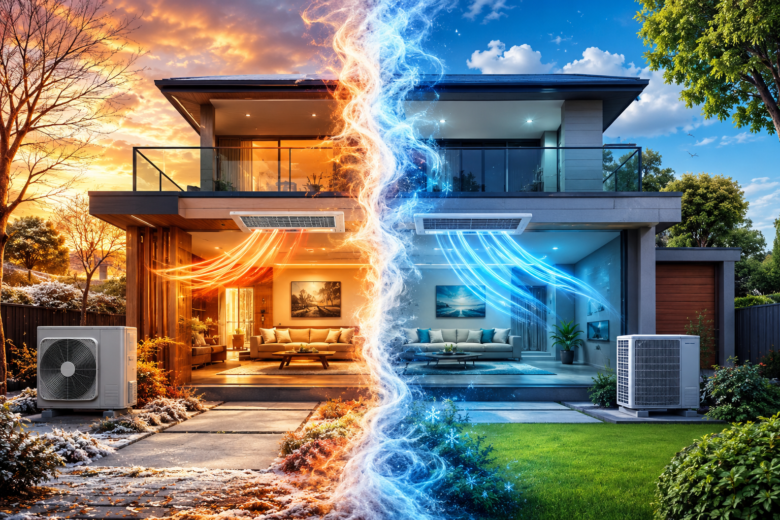
Modern heating and cooling systems are designed to provide consistent temperature control while also reducing energy consumption. Many homeowners today focus on improving home comfort with efficient climate systems because they help lower electricity costs while keeping indoor spaces comfortable.
Understanding Heating and Cooling Systems
Before choosing a system for your home, it is helpful to understand the basics of heating and cooling technology.
Common heating and cooling technologies used in Australian homes include:
- Reverse cycle air conditioning
- Split system air conditioners
- Ducted heating and cooling systems
- Evaporative cooling systems
- Electric heating units
Each type of heating and cooling system works differently and offers unique benefits depending on the size of the home and local climate conditions.
Why Heating and Cooling Matters for Homes in Melton
Melton is known for warm summers and cool winter evenings. These seasonal variations make dependable heating and cooling systems important for maintaining indoor comfort.
Adapting to Seasonal Weather
Temperatures can change quickly throughout the year. Efficient heating and cooling systems help maintain a stable indoor environment regardless of outside conditions.
Improved Energy Efficiency
Modern heating and cooling systems are designed to use less energy while providing better performance. Many homeowners in Victoria are now upgrading older systems to more energy-efficient models.
Comfortable Living Spaces
A properly installed heating and cooling system ensures that indoor temperatures remain comfortable for families, children, and visitors.
Types of Heating and Cooling Systems for Residential Properties
Different homes require different solutions when it comes to heating and cooling.
Split System Air Conditioners
Split systems are one of the most common heating and cooling options in Australian homes.
They consist of:
- An indoor wall-mounted unit
- An outdoor compressor
These systems work well for individual rooms or small living spaces.
Multi-Split Systems
Multi-split heating and cooling systems allow multiple indoor units to connect to one outdoor unit. This setup is useful when several rooms need temperature control.
Ducted Heating and Cooling Systems
Ducted systems provide whole-home heating and cooling by distributing air through ceiling or floor ducts.
Advantages include:
- Even temperature distribution
- Central temperature control
- Quiet operation
Many large homes prefer ducted heating and cooling because it provides consistent comfort in every room.
Evaporative Cooling Systems
Evaporative cooling works by passing air through water-soaked pads to cool it before distributing it inside the home.
This type of heating and cooling system is commonly used in dry climates and can be energy efficient during hot weather.
Benefits of Modern Heating and Cooling Systems
Installing a modern heating and cooling system provides several advantages for homeowners.
Energy Savings
Newer systems use advanced technology that reduces electricity consumption compared to older models.
Better Temperature Control
Modern thermostats allow users to set precise indoor temperatures. This improves comfort and reduces unnecessary energy usage.
Improved Air Quality
Many heating and cooling systems include filters that remove dust, allergens, and airborne particles.
Year-Round Comfort
Combined systems provide both heating and cooling functions, allowing homeowners to maintain comfort during every season.
Factors to Consider When Choosing Heating and Cooling Systems
Selecting the right heating and cooling system requires careful consideration of several factors.
Home Size
The size of the property determines the capacity required for the heating and cooling unit.
Energy Efficiency Ratings
Energy-efficient models consume less electricity while providing effective climate control.
Installation Requirements
Some heating and cooling systems require ductwork, while others only require wall-mounted units.
Budget
Costs vary depending on system type, installation complexity, and long-term energy consumption.
Heating and Cooling Maintenance Tips
Regular maintenance helps keep heating and cooling systems operating efficiently.
Clean or Replace Air Filters
Air filters collect dust and debris. Cleaning or replacing them regularly improves airflow and system performance.
Keep Outdoor Units Clear
Outdoor components should remain free from leaves, dirt, and obstructions.
Schedule Regular Servicing
Professional servicing ensures that heating and cooling systems continue operating safely and efficiently.
Routine inspections also help detect small issues before they become costly repairs.


Energy-Saving Tips for Heating and Cooling
Homeowners can improve efficiency by using heating and cooling systems wisely.
- Set thermostats to moderate temperatures
- Close doors and windows while systems are running
- Use ceiling fans to improve air circulation
- Ensure proper home insulation
- Schedule regular system maintenance
These simple steps help reduce energy consumption while maintaining indoor comfort.
Questions and Answers: Common Questions About heating and cooling in Australia
Q: What is the most energy-efficient heating and cooling system for homes?
A: Reverse cycle air conditioning systems are often considered among the most energy-efficient options because they provide both heating and cooling using heat transfer technology.
Q: How often should heating and cooling systems be serviced?
A: Most experts recommend servicing heating and cooling systems once every year to maintain performance and extend the life of the equipment.
Q: Are ducted heating and cooling systems suitable for large homes?
A: Yes, ducted heating and cooling systems are commonly used in larger homes because they provide consistent temperatures throughout multiple rooms.
Q: Can heating and cooling systems improve indoor air quality?
A: Yes, many modern heating and cooling systems include filtration systems that remove dust, pollen, and airborne particles.
Q: How can homeowners reduce energy costs when using heating and cooling systems?
A: Energy costs can be reduced by maintaining the system regularly, setting reasonable temperature levels, and ensuring proper insulation throughout the home.
Conclusion: Your Path to a Successful heating and cooling in Australia
Reliable heating and cooling systems play an important role in maintaining comfort, energy efficiency, and indoor air quality in Australian homes. In areas such as Melton, where temperatures vary throughout the year, having the right climate system can make a noticeable difference in everyday living.


