
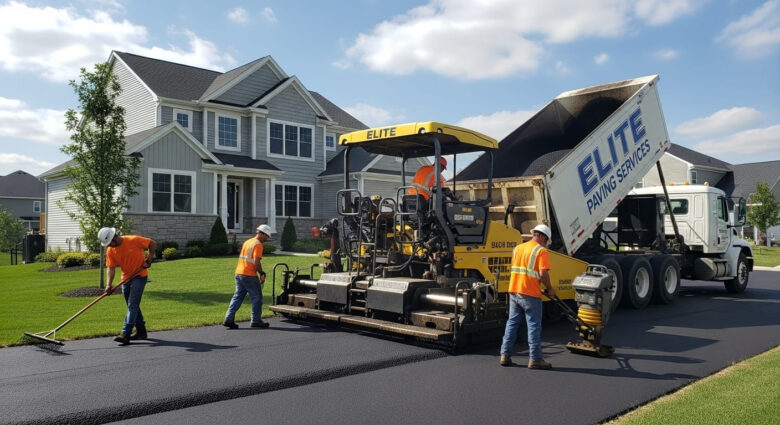
When you look at a beautiful driveway or a stunning patio, your eyes are naturally drawn to the surface. You see the rich colours of the natural stone, the neat patterns of the brickwork, or the sleek modern finish of large porcelain pavers. It is easy to think that the choice of stone is the most important decision you will make. However, if you talk to experienced paving contractors, they will tell you a very different story.
There is a hidden consensus in the industry. Whether they are working on a small garden path in suburban Melbourne or a massive commercial plaza in Sydney, the professionals agree that the success or failure of the entire project hangs on one critical step: the preparation of the sub-base.
It is the part of the job you never see. Once the pavers are laid, it is buried forever. Yet, this invisible layer is the difference between a driveway that looks perfect for twenty years and one that sinks, cracks, and holds water after the first winter. Understanding this single step can save homeowners thousands of dollars in repairs and heartache.
The Myth of “Just Laying Bricks”
Many DIY enthusiasts and budget operators treat paving as a surface-level activity. They might scrape off the grass, throw down a bag of sand, and start laying bricks. In the short term, this might look acceptable. But the ground beneath our feet is not static.
In Australia, we deal with highly reactive clay soils. These soils swell when they get wet and shrink when they dry out in the summer heat. If your pavers are sitting directly on this moving earth, they will move with it. You will see individual bricks popping up to create trip hazards, or whole sections sinking to create puddles.
Professional paving contractors view their work as engineering. They are not just decorating the ground; they are building a structure. And like any structure, it needs a solid foundation.
The Excavation: Getting Down to Business
The process begins with excavation. You have to remove the organic material. Grass, roots, and topsoil are soft. As they decompose, they shrink, leaving voids under your paving.
A professional team will bring in machinery—excavators and bobcats—to dig down. For a pedestrian patio, they might go down 100mm to 150mm. For a driveway that needs to support the weight of a two-tonne SUV, they will dig significantly deeper, often 200mm to 300mm. This ensures that the reactive topsoil is gone and they are building on a stable substrate.
The Magic of Road Base
Once the dirt is out, the stability goes in. This is where “road base” is introduced. As the name suggests, this is the same material used to build the foundations of our highways. It is a specific mixture of crushed rock (usually 20mm aggregate) and fine dust.
This mix is crucial. The rocks provide strength, while the dust fills the gaps between them. When this material is compacted, it locks together to form a semi-rigid layer. It becomes incredibly hard—almost like concrete—but retains just enough flexibility to absorb minor ground movements without cracking.
The Compaction Factor
You cannot just spread the road base and hope for the best. It must be mechanically compacted. Paving contractors use heavy vibrating plate compactors. They run over the area multiple times, often wetting the material slightly to help the particles slide into place. This removes the air pockets.
If this step is rushed or skipped, the road base will settle naturally over time. When it settles, your expensive stone pavers settle with it, leading to the dreaded “wheel ruts” in driveways where the tyres travel.
Managing Water: The Silent Destroyer
The second part of this critical preparation step is drainage. Water is the enemy of longevity. If water gets under your paving and sits there, it softens the clay subgrade, turning it into mud.
During the preparation of the sub-base, skilled paving contractors set the “levels.” They use laser technology to ensure the ground has a slight slope, usually away from the house and towards a stormwater drain or garden bed.
This slope ensures that water runs off the surface rather than pooling. Pooling water is dangerous; it grows moss, becomes slippery, and can cause efflorescence (white salty stains) to appear on your pavers. By managing the water flow underground, the contractor protects the integrity of the entire project.
The Bedding Layer: The Final Adjustments
On top of the rock-hard road base, a final thin layer of sand is added. This is the bedding sand. It is usually only 20mm to 30mm thick. Its job is not structural; its job is to provide a smooth bed for the pavers to sit on.
This sand allows the contractor to tap the pavers down to get them perfectly level. It accommodates the slight variations in thickness that occur in natural stone. However, using too much sand is a common mistake. Sand does not lock together like road base. If the sand layer is too thick, the pavers will feel “spongy” and move underfoot.
Why Some Contractors Skip This Step
If the sub-base is so important, why do some quotes ignore it? The answer is cost and effort.
Excavation is expensive. You have to pay for the machinery, the labour, and the tipping fees to dispose of the soil. Bringing in tonnes of crushed rock is also a significant material cost.
A “cheap” quote often reduces the excavation depth. Instead of digging down 200mm, they might only scrape off 50mm. This saves them hours of work and hundreds of dollars in tip fees. They pass this “saving” on to you. But in reality, you are paying for a product that is destined to fail. You are paying for a cosmetic cover-up rather than a structural solution.
Choosing the Right Stone for the Job
While the base determines the longevity, the paver determines the look and function. Experienced paving contractors will guide you towards materials that suit the Australian climate.
- Driveways: Need dense, thick pavers (50mm+) like clay brick or cobblestones that can withstand vehicular weight without cracking.
- Pool Surrounds: Need slip-resistant, cool-to-touch stones like Travertine or lighter-coloured Sandstone.
- Entertaining Areas: Porcelain is gaining popularity for its stain resistance, making it perfect for BBQ areas where grease spills happen.
Edge Restraints: Locking It All In
The final part of the structural puzzle is the edge restraint. Imagine a rack of billiard balls. If you remove the triangle, the balls spread out. Pavers act the same way. The weight of traffic pushes them outwards.
To prevent the pavers from drifting into your garden beds and opening up gaps, the perimeter must be locked in. Contractors pour a concrete “haunch” around the edge. This is a wedge of concrete that sits underground, hidden by the grass or garden soil. It acts as a permanent bookend, keeping the paving tight and secure for decades.
Questions and Answers: Common Questions About paving contractors in Australia
Q: How do I know if a contractor is cutting corners on the sub-base?
Ask them specifically about their excavation depth. A reputable contractor will be transparent about digging down 150-200mm for a driveway. If they say they only need to remove the grass, be wary. Also, ask what type of road base they use. “Crushed rock” or “DGB20” is the standard. If they plan to lay directly on sand over soil, that is a red flag.
Q: Can I pave over my old concrete driveway?
Yes, this is a valid technique called an “overlay.” If the existing concrete is sound (no major cracks or heaving), paving contractors can glue thin pavers or stone tiles directly onto it. This saves excavation costs. However, you must check that the new height won’t block doors from opening or cover the damp-proof course of your house walls.
Q: Do I need a permit for paving?
For general backyard landscaping, usually no. However, for driveways that cross the council nature strip (the vehicle crossing), you almost always need a permit. Also, some councils have regulations on “permeable surfaces” to prevent stormwater runoff overloading the street drains. A professional contractor will know the local rules for your suburb.
Q: Why are my pavers turning white?
This is likely “efflorescence.” It is a natural salt that migrates out of the concrete or stone when it gets wet. It appears as a white, powdery residue. It is usually temporary and will wash away over time. However, good drainage helps minimize it. If it persists, specialized cleaning acids can remove it.
Q: How long does a paving job take?
It depends on the size and complexity. A standard 50-square-metre driveway might take 3 to 5 days. Day one is usually excavation. Day two is installing the base. Day three and four are laying and cutting the stone. Day five is grouting and cleaning. Weather plays a big role; rain stops the compacting process, so always allow for flexibility in the timeline.
Conclusion: Your Path to a Successful paving contractors in Australia
A beautifully paved area adds immense value to your home. It creates usable outdoor living space and boosts curb appeal. But paving is an investment, not a quick fix. To get a return on that investment, you need the job to last.


